
A tooth extraction is a dental procedure where a tooth is fully removed from its socket. It is commonly described as "pulling" a tooth. There are various reasons why a tooth extraction might be necessary, such as severe damage or decay. This common dental procedure can help eliminate bacteria and enhance your overall oral health. At BOOM Smiles, we know that dental procedures, like tooth extractions, can bring anxiety and fear. That's why we make your comfort our top priority. Dr. Bhumesh Hirapara and our team take the time to really hear what's on your mind, answer any questions you have, and customize our approach to fit your specific needs.

When a tooth is extensively decayed and cannot be saved with a filling or crown, extraction may be the best option.
Wisdom teeth that are impacted or causing pain often require extraction to prevent further issues.
In some cases, tooth extraction is necessary to create space for orthodontic treatment and achieve proper alignment.
Before any tooth extraction at BOOM Smiles, your journey begins with an initial consultation with Dr. Bhumesh Hirapara. This is your opportunity to discuss your concerns, symptoms, and dental history. Dr. Hirapara will perform a thorough examination of your tooth and surrounding structures. X-rays may also be taken to get a clear picture of the tooth's position and any potential complications.

Based on the examination and X-ray results, Dr. Hirapara will discuss the recommended treatment plan with you. If tooth extraction is deemed necessary, he will explain the reasons behind the decision and what you can expect during and after the procedure. This is also the time to ask any questions you may have about the extraction process, recovery, and alternatives.
Based on the examination and X-ray results, Dr. Hirapara will discuss the recommended treatment plan with you. If tooth extraction is deemed necessary, he will explain the reasons behind the decision and what you can expect during and after the procedure. This is also the time to ask any questions you may have about the extraction process, recovery, and alternatives.

Based on the examination and X-ray results, Dr. Hirapara will discuss the recommended treatment plan with you. If tooth extraction is deemed necessary, he will explain the reasons behind the decision and what you can expect during and after the procedure. This is also the time to ask any questions you may have about the extraction process, recovery, and alternatives.
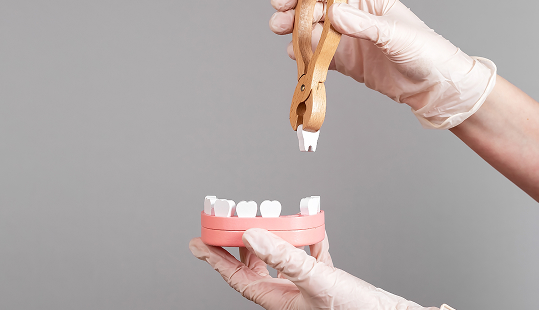
Specialized dental instruments are then used to delicately loosen the tooth and lift it from its socket. If necessary, your dentist might make incisions in the gums to access the tooth, particularly if it is severely decayed or has fractured at the gum line. Following the removal of the tooth, the socket is thoroughly cleaned and disinfected. In certain instances, a dental bone graft may be placed by your dentist to prevent bone loss in the jaw. Finally, stitches may be performed to assist in the healing process.
A tooth extraction may be necessary for a number of reasons, such as:
Proper post-operative care is essential to promote healing and prevent complications after a tooth extraction. Here are some tips for a smooth recovery:
We also offer tooth extractions at our Hoboken office and follow-up care for added convenience.
After getting a tooth pulled, it's pretty normal to feel some pain and discomfort. Dr. Hirapara might give you pain medications to help with that, so make sure to follow the instructions. To deal with swelling and discomfort, you can try putting an ice pack on your cheek near where the tooth was pulled. Do it for 10 minutes, then take a break for another 10.
You might notice a bit of bleeding, which is okay. Just bite down gently on a clean piece of gauze over the spot for about 30 minutes to help stop it.
For the first day, try not to spit or rinse too hard since that can interfere with the blood clot that's forming. Stick to soft foods that are easy to chew, and skip the hot, spicy, or hard foods that could bother your mouth. It's important to drink lots of fluids, but avoid using a straw for the first day. The sucking motion can dislodge the blood clot, so it's best to just sip from a cup.
Keep brushing your teeth as usual, but be gentle around the spot where the tooth was extracted. Try not to brush directly over it for a few days.
About 24 hours after the extraction, you can start rinsing your mouth gently with warm salt water a few times a day. This helps keep the area clean and helps you heal up faster.
And for the first day, take it easy - no strenuous activities or heavy exercise. This helps prevent too much bleeding and lets your mouth heal properly.
We provide different sedation options to help you feel comfortable during your tooth extraction:
Laughing Gas (Nitrous Oxide): This is a safe and effective option that helps you feel calm during the procedure while still being awake and able to respond.
Oral Sedation: You'll take a prescribed pill before your appointment to help you feel relaxed throughout the procedure. Just remember, you'll need someone to drive you home afterward.
IV Sedation: Our trained team can give you IV sedation for a deeper level of relaxation. You'll still be conscious, but you might not remember much of the procedure.
Did you know… Your dentist will always try to save your tooth first before considering an extraction.